Every year when the temperature drops, you begin to hear those dreaded words: flu season.
Not only does cold weather weaken our immune systems, it can strengthen viruses and make it easier for them to spread. No matter your age, vaccination may be the best safeguard against this bacterial onslaught. But adults over 50 are especially susceptible to the flu virus and many other dangerous infections like pneumonia and tetanus. An estimated 50,000 to 90,000 adults in the United States die from vaccine-preventable diseases every year and the mortality rates increase significantly as we age.
The Most Important Vaccines For Seniors
Luckily, in our current century, vaccinations are widely available for many of these potentially deadly pathogens and the Center for Disease Control recommends a schedule of specific vaccinations for older adults. And for seniors with certain types of Medicare, financial help may even be available to alleviate some of the costs of these immunizations. Here are the four most crucial vaccines for adults over 50.
Influenza (Flu) Shot
Influenza, commonly called the flu, is a viral respiratory infection that can be life-threatening for people of any age. But older adults must be especially cautious, as the normal aging of our immune systems can make it more difficult for our bodies to fight off the infection. It’s even more dangerous for those who live with a chronic condition like heart disease or diabetes, as complications can develop and even lead to hospitalization. In fact, according to the CDC, adults over 65 make up half of all influenza hospitalizations and between 70 to 90% of all flu-related deaths. Be sure to get your flu shot!
Pneumococcal Vaccine
Pneumococcal disease might not be a familiar household name but we have all heard of the conditions that it can lead to: pneumonia and meningitis among others. It is the most common cause of bloodstream infections and can infect the ear and sinuses as well. Like the flu, a weakened immune system and chronic conditions may increase these risks. While these infections can often be mild, pneumonia is actually the 5th most frequent cause of hospitalization in the United States and over half of those are from Americans over 65 years old.
Tetanus (Td) Shot
It’s often referred to simply as a tetanus shot, but the Tdap vaccine also helps our bodies fight off diphtheria and pertussis, or whooping cough. This particular vaccine can usually only be given once but if you never received it as a child, it’s not too late to get yourself immunized. But if those over 65 have already gotten the full Tdap shot, it is recommended that they seek the variety of vaccine called the Td shot every 10 years, which doesn’t include the pertussis component.
Shingles (Zoster) Vaccine
Herpes zoster (or shingles) is a painful skin condition brought on by the same virus that causes chickenpox. It’s common knowledge that individuals who have previously contracted chickenpox have a higher risk of developing shingles, but older people are also more vulnerable than their younger counterparts. Seniors are also more at risk for the complications that can arise from this infection, such as the painful nerve condition called postherpetic neuralgia (PHN). These kinds of complications occur in almost half of older adults who develop shingles.
When Should Seniors Get Vaccinated?
Though many vaccine-preventable diseases are associated with seasonal changes, most can be contracted at any time of year. To help make sure you are up-to-date with all your immunizations, the CDC keeps the newest recommended vaccine schedule for adults on its website.
Vaccine Schedule For Adults
Experts in this field often suggest vaccination schedules based on age. In some cases, these experts also recommend different varieties of a given vaccine depending on the age of the patient.
For example, flu vaccines are updated annually to make sure they are effective against the current strains of influenza. Additionally, the immunity provided by the flu shot is short-lived so it is best to get vaccinated every year. Flu vaccines are usually available from September through April depending on supplies. Several different forms of the vaccine exist including two designed specifically for people over 65, namely the “high dose vaccine” and the adjuvanted flu vaccine.
The shingles vaccine, on the other hand, is not required during a specific season but there are multiple variations available and it may still require a schedule to keep track of. The CDC suggests that healthy adults over 50 get the two-dose version of the vaccine, called the zoster recombinant vaccine (or RZV), as opposed to the single-dose zoster live variant. The two doses are generally spaced out over several months but are roughly 90% effective once they have both been administered.
Travel Vaccinations
Many seniors take up traveling after retirement has freed up more of their time. Wherever this trekking may take you, it is wise to stay up-to-date on your vaccinations. Certain vaccine-preventable illnesses like measles and seasonal flu are much more prevalent abroad than they are in the States. Check for your destination on the CDC’s website to see what vaccines may be needed where you’re going.
Now that you know when to get immunized, you might be wondering where you can get a quick, efficient, and affordable vaccination. This can get somewhat complicated depending on what vaccines you need and what state you live in but most vaccines can be administered at one of the healthcare facilities you visit regularly.
Doctor’s Office
Doctor explaining Medicare vaccine coverage.
Even though many other options are available, most will likely prefer to get their vaccinations at their regular doctor’s office. Your primary care doctor is a great resource not only for detailed information about what vaccines you or your family may need, but obviously for the administering of the vaccine itself. They can also advise on which variety of a given vaccine is best for you, as well as any side effects that may accompany it.
Pharmacies & Clinics
For many seniors, the most readily and easily available venue for vaccines is their local pharmacy. These establishments are usually closer to their homes than a doctor’s office or hospital and can provide many of the same vaccinations. It is probably best to call ahead to ensure the pharmacy or clinic is stocked with the vaccine you need as supplies can run low.
Medicare Vaccine Coverage
An often overlooked element of the threat posed by vaccine-preventable diseases is the financial cost. A 2007 study of the seasonal flu found that $87 billion was spent every year on direct and indirect medical costs. It also found that adults over 65 made up about 64% of that cost. Clearly, it is cheaper to get vaccinated than to potentially incur the medical expenses of treating the disease itself but if the cost of immunization still seems daunting, there are options available to help with or completely cover the vaccines.
Does Medicare Pay For Flu Shots?
Flu shots are completely covered by Medicare Part B, as they are categorized as a preventive service. As long as your healthcare provider accepts Medicare, your annual flu shot will be a cost-free benefit. For those who are enrolled in a Medicare Advantage plan, you may need to see an in-network doctor or pharmacy to be totally covered. This complete coverage applies to the pneumococcal vaccine as well!
Does Medicare Pay For Shingles Vaccine?
Medicare Part D plans, which are Medicare Advantage plans that cover prescription drugs, virtually all cover the shingles vaccine. As these are supplemental plans, an out-of-pocket cost is usually associated with these vaccinations. Whether this is in the form of a copayment or coinsurance, it is best to contact your insurance provider directly to discuss the potential out-of-pocket cost, as well as any specific rules they might have for the administering of the vaccine itself.
Turning 65 Checklist
Does Medicare Pay For Tetanus Shots?
Like the shingles vaccine, neither Td and Tdap versions of the tetanus shot are covered by Medicare Part B. These vaccines will need to be covered by an insurance plan that includes prescription drug coverage, such as Medicare Part D. These plans are purchased through private insurance companies and supplement the coverage provided by the original components of Medicare.
Depending on where you live, there could be countless Medicare Advantage plan options available and finding the one that best suits you can be exhausting and outright confusing. Take out some of the guesswork and get in touch with a licensed agent through Medicare Plan Finder today to find the best plan for your needs! Call us at 844-431-1832 or contact us online to get started!
Does Medicare Cover Mammograms and Other Women’s Health Services?
Medicare is not just for sick days! Did you know you could use your Medicare coverage for annual wellness exams, like check-ins with your gynecologist or OB/GYN? This post will tell you about all the ways women can use Medicare preventative benefits to stay healthy.
Does Medicare Cover Gynecology?
As long as you have an OB/GYN that accepts Medicare, your Medicare Part B gives you access to preventative women’s health care.
There are no exceptions – every woman enrolled in Medicare Part B has gynecology coverage. You should be taking advantage of these benefits! Remember that your Medicare is designed not just to help you in a time of illness or injury, but also to prevent those illnesses or injuries from occurring.
If you are enrolled in Medicare, your annual mammogram screening is covered 100% so long as your provider accepts Medicare. Diagnostic mammograms are covered at 80%, which leaves you responsible for the remaining 20% ($60 on average). Diagnostic mammograms are used if you have suspicious or concerning results from your annual mammogram.
A Medicare Supplement plan can help cover the additional costs of diagnostic mammograms and other services. Depending on which type of Medicare Supplement plan you purchase, benefits can include:
Part A coinsurance and hospital costs
Part B coinsurance and copayments
Blood work copays (up to three pints)
Hospice coinsurance and copayments
Skilled nursing facility coinsurance
Part A deductible
Part B deductible
Part B excess charges
Foreign emergency travel
These financial benefits can help with any of your health-related costs, not just mammograms. If you would rather pay a small monthly premium to help protect yourself from unforeseen health expenses, a Medicare Supplement plan may be right for you.
Medicare Advantage plans are required to cover, at a minimum, the same as Original Medicare. This means that your annual mammogram is still cost-free to you and diagnostic mammograms are covered at 80%.
However, Medicare Advantage plans can offer several additional benefits beyond Original Medicare that can help you maintain a healthy and proactive lifestyle. These benefits include vision, hearing, and dental coverage, monthly OTC pharmacy allowance, non-emergency transportation, group fitness classes like SilverSneakers®, and so much more! These plans have continued to grow in popularity each year, and more than 20.4 million beneficiaries are taking advantage of these benefits.
Medicare Mammogram Eligibility
To be eligible for preventive mammogram screening coverage, you need to be a woman enrolled in Original Medicare (Part A and B) or a Medicare Advantage plan. Men are not eligible for annual Medicare-covered mammograms. While it is possible for men to get breast cancer, it is very rare. That’s why most men are not eligible for preventive mammograms. However, men who are at high-risk can have diagnostic mammograms covered at 80%, just like women.
How Often Does Medicare Pay for Mammograms?
We know Medicare covers Mammograms, but how many? Medicare will cover one preventive mammogram per year. If your results are concerning or show you have a high risk of developing cancer, Medicare will continue to pay 80% for each diagnostic mammogram needed. There is no limit on how many diagnostic mammograms Medicare will cover.
Does Medicare Cover Gynecological Exams?
Gynecological exams and services covered by Medicare include:
Gynecological exams
Breast exams
Pap smears
Gynecological cancer screenings
Testing for HPV, HIV, and other sexually transmitted diseases
Treatment for pelvic and vaginal infections
Treatment for abnormal vaginal bleeding
Contraception counseling
Menstrual pain and irregularities
Menopausal management
Does Medicare Cover Pelvic Exams, Pap Smears, and Breast Exams?
Your Medicare gives you access to pelvic exams, pap smears, and breast exams. These tests check for cervical, vaginal, and breast cancer. Coverage is available for pelvic exams and pap smears once every two years. If you’ve had abnormal results in the past three years, you’ll be covered for yearly tests instead.
You’ll also be covered for clinical breast exams. Breast cancer is the most common cancer for women. Risk increases with age, and you can be cured much more easily if it is caught early on. Take advantage of free preventative care!
Additionally, you can ask your doctor for STI (sexually transmitted infection) screenings and counseling. Counseling is recommended for those who are at a higher risk. Part B covers yearly tests for the most common STIs – chlamydia, gonorrhea, syphilis, and hepatitis B, as well as HIV. STI tests are completely free with a doctor who accepts Medicare assignment.
Gynecologists Covered by Medicare
Are you ready to see a gynecologist? The best way to confirm that your gynecologist accepts Medicare as insurance is to ask when you set your first appointment, but there are tools you can use to find out who accepts Medicare before you start calling around.
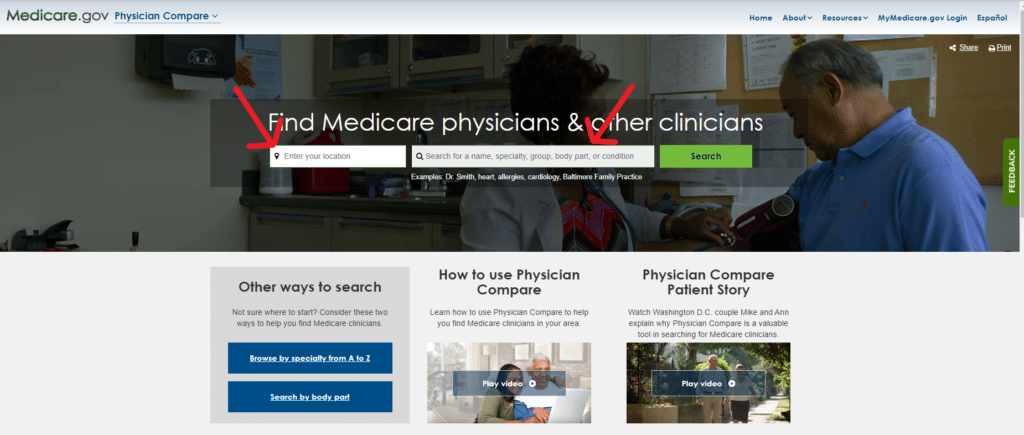
Remember that if you have a Medicare Advantage or Medicare Supplement plan, you may want to check to make sure that the doctor accepts your plan. If you only have Original Medicare (parts A and B), you can use the Medicare.gov physician finder tool to look for gynecologists in your area who accept Medicare.
To start, enter your location and the phrase “gynecologist” or “ob/gyn” in the search bar. The tool will not let you enter the type of doctor you’re looking for until you’ve entered your location.
Medicare.Gov Physician Finder Tool
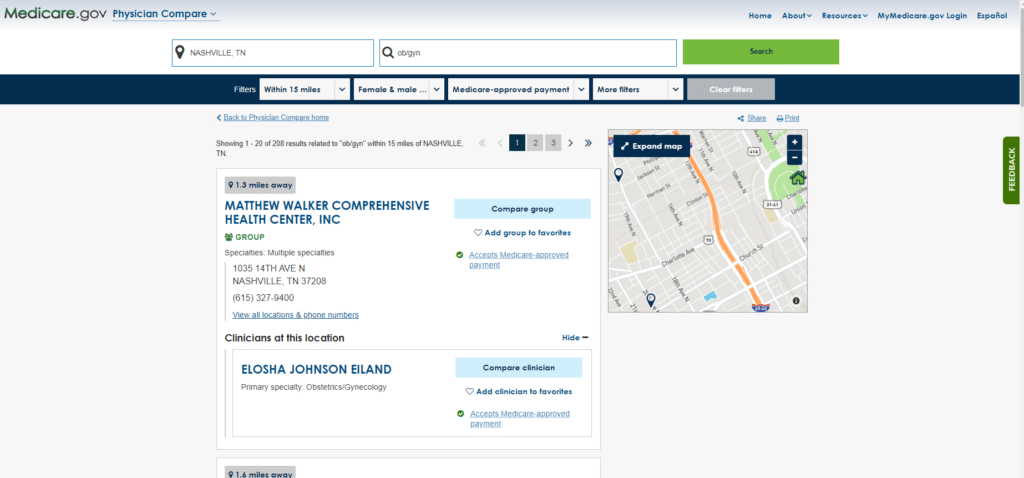
After clicking the green “search” button, you’ll see a list of doctors in your area who accept Medicare for gynecology. The tool will tell you where they are located, how far they are from the location you entered, etc.
Medicare.Gov Physician Finder Tool
Get Women’s Health Coverage
Fortunately, Original Medicare covers most women’s health needs. However, Medicare Advantage and Medicare Supplements can supplement your Original Medicare coverage. If you are looking for additional health benefits through Medicare Advantage or financial benefits through Medicare Supplements, our licensed agents can help. They are contracted with all the major carriers so they can enroll you in a plan without bias. With Medicare Plan Finder, there’s never an obligation to enroll and appointments are always cost-free to you. Fill out this form or give us a call at 844-431-1832.
This blog was originally published on July 20, 2017 and last updated on October 3, 2019 by Anastasia Iliou.
A Guide to Osteoporosis Medicare Coverage
Osteoporosis literally means “porous bone”. It’s characterized by low bone mass and deteriorating bone tissue and it leads to fragile bones and an increased risk of hip, spine, and wrist fractures.
According to the International Osteoporosis Foundation (IOF), more than 61 million people will be affected by osteoporosis or low bone density by 2020. If you’re one of those millions of people and you have Medicare, you may wonder about osteoporosis Medicare coverage and what you can do to help your bone health.
Osteoporosis Medicare Treatment and Testing Coverage
Osteoporosis Screening Medicare | Medicare Plan Finder
Original Medicare covers certain preventive services and treatments for osteoporosis.
Does Medicare Cover Bone Density Tests?
As part of Medicare’spreventive care program, Medicare Part B may cover one bone density test every two years—more often if the tests are medically necessary—if you meet one or more of the following conditions:
You’re a woman whose doctor determines you’re at risk for osteoporosis, based on estrogen deficiency, your medical history, and other risk factors
Your X-rays show possible osteoporosis, osteopenia, or spine fractures
You take prednisone or steroid-type drugs or you plan to start
You have primary hyperparathyroidism
You’re monitored to see if your osteoporosis drug treatment is working
Does Medicare Cover Prolia Injections and Other Osteoporosis Drugs?
Original Medicare (Part A and Part B) may help pay for an injectible drug for osteoporosis (Prolia, Reclast, or other drugs) and visits by a home health nurse to inject the drug if you meet the following conditions:
You’re a woman.
You’re eligible for Part B and qualify for Medicare home health services.
You have a bone fracture that a doctor certifies is related to postmenopausal osteoporosis.
Your doctor certifies that you’re unable to learn to give yourself the drug by injection and your family members and/or caregivers are unable and unwilling to give you the drug by injection.
You may owe coinsurance and/or deductibles. You may be responsible for paying other services in full if Medicare doesn’t approve them.
Prolia Finder
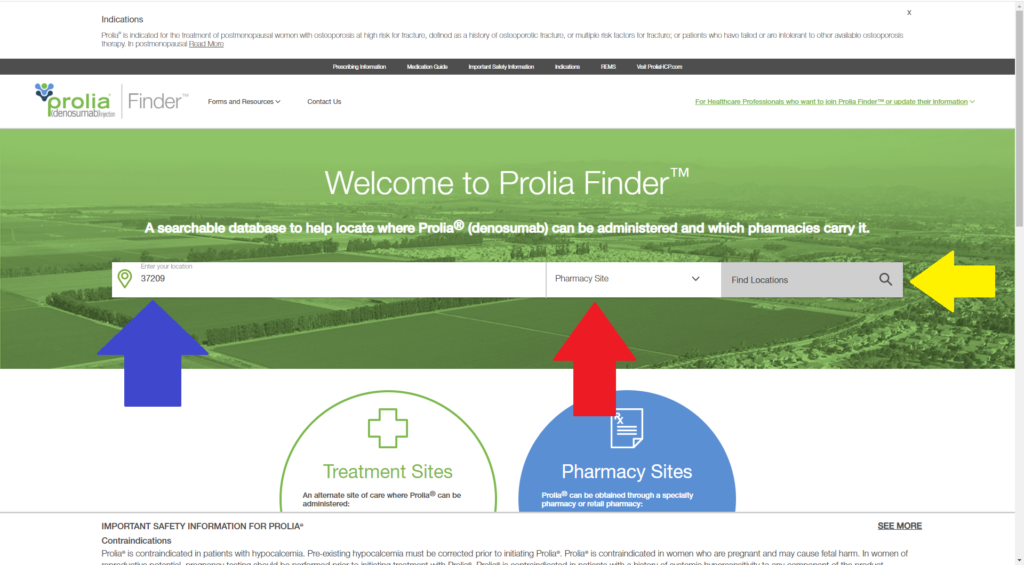
If you don’t know where to get started looking for Prolia, click here. That will lead you to the Prolia finder tool. Enter your zip code in the box above the blue arrow. We used our home office in Nashville, Tennessee’s zip code, which is 37209.
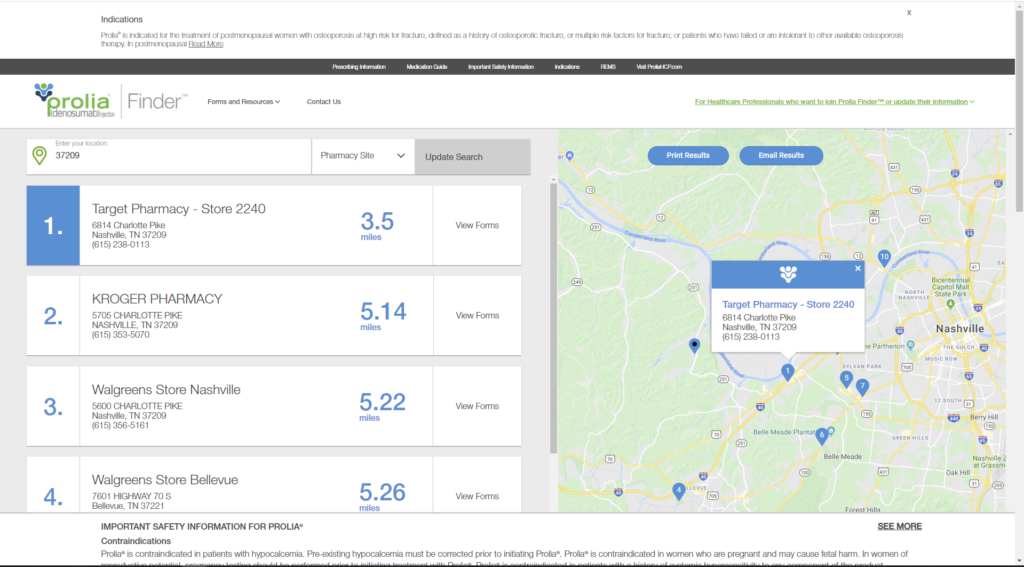
Then select “Pharmacy Site” in the drop-down menu above the red arrow. Then click “Find Locations” beside the yellow arrow. That will lead you to a list of pharmacies where you can find Prolia. You may have to contact more than one to find the right facility for you.
The next step is going to your pharmacy and picking up your medication. You may owe Part D or Medicare Advantage drug fees. Once you obtain the medication, make an injection appointment with your healthcare provider.
You can also receive an injection at a Prolia treatment site, which you can find using the same Prolia finder tool.
To find a treatment location, go through the same steps to find a pharmacy site, except select “Treatment Site” from the drop-down menu above the red arrow. After you click “Find Locations” you’ll reach a list of Prolia treatment sites and contact information. Again, you may have to call more than one to find the best fit.
Medicare Coverage for Other Osteoporosis Drugs
In most cases, Original Medicare doesn’t include prescription drug coverage. If your doctor prescribes ibandronate (Boniva), alendronate (Fosamax), and/or risedronate (Actonel, Atelvia) and you want Medicare coverage, you’ll need to enroll in either a Medicare Part D plan or a Medicare Advantage plan with a prescription drug benefit.
How to Increase Bone Density at Home
Along with taking your prescribed medications, there are many things you can do to help increase your bone density at home. According to the National Osteoporosis Foundation (NOF), you can protect your bones by exercising, eating right, avoiding tobacco, and limiting alcohol.
Exercises for Osteoporosis
The two most important types of osteoporosis are weight-bearing and muscle-strengthening exercises. Both types of exercises can help build and maintain bone density. As always, you should check with your healthcare provider before starting any exercise program.
Weight-Bearing Exercises
Weight-bearing exercises include activities that make you move against gravity while staying upright. Weight-bearing exercises can be high-impact or low-impact.
High-impact weight-bearing exercises help build bones and keep them strong. However, you may need to avoid high-impact exercises if you have a broken bone.
Some examples of high-impact weight-bearing exercises:
Dancing
High-impact aerobics
Hiking
Jogging/running
Jumping Rope
Stair climbing
Tennis
Low-impact weight-bearing exercises are also effective at keeping bones strong. They’re also a safe alternative if you can’t do high-impact exercises.
Some examples of low-impact weight-bearing exercises:
Using elliptical machines
Doing low-impact aerobics
Using stair climbers
Brisk walking on a treadmill or outside
Muscle-Strengthening Exercises
Muscle-strengthening exercises use a weight or some other resistance to push or pull against gravity. They are also known as resistance exercises and include:
Lifting free weights
Using weight machines
Using elastic exercise bands (resistance bands)
Lifting your own body weight (pull-ups, pushups, etc.)
Functional movements that you use in daily life, such as standing from a sitting position
Yoga and pilates can also help improve strength, balance, and flexibility. However, certain positions may not be safe for people with osteoporosis or low bone density. If you have questions about the safety of an exercise, consult your doctor or physical therapist.
Medicare Fitness Coverage
Medicare Fitness Coverage | Medicare Plan Finder
Original Medicare does not cover gym memberships or fitness classes. However, certain Medicare Advantage plans offer coverage for fitness classes along with other supplemental benefits such as dental, hearing, and vision coverage.
A licensed agent with Medicare Plan Finder may be able to help you find a plan that suits your needs. Plans vary by zip code, but some Medicare Advantage with fitness benefits have $0 premiums. To set up a no-cost, no-obligation appointment, call 844-431-1832 or contact us here.
Diet for Osteoporosis
Diet for Osteoporosis | Medicare Plan Finder
According to NOF, a “balanced diet that’s rich in calcium and Vitamin D” is important for your bone health.
NOF says the following foods are good for your bones because they may contain nutrients such as magnesium, potassium, Vitamin C, and Vitamin K along with Vitamin D and calcium:
Dairy Products
Low-fat milk, yogurt, and cheese
Non-fat milk, yogurt, and cheese
Fish
Canned sardines and salmon (with bones)
Fatty varieties such as salmon, mackerel, tuna and sardines
Fruits and Vegetables
Artichokes
Bananas
Beet greens
Broccoli
Brussels sprouts
Chinese cabbage
Collard greens
Dandelion greens
Kale
Mustard greens
Okra
Oranges
Papaya
Pineapple
Plantains
Plantains
Potatoes including sweet potatoes
Red peppers, green peppers,
Spinach
Tomato products
Turnip greens
Fortified Foods
Some food manufacturers add Vitamin D and calcium to products such as cereal, juice, and bread. Always check the product’s label to see exactly what’s in the container.
Find Osteoporosis Medicare Coverage Today!
Talk to one of our agents if you want to learn more about Medicare’s coverage for osteoporosis. Our licensed agents are highly trained and they may be able to help you find a plan that fits your budget and lifestyle.
If you’ve been diagnosed with low bone density or osteoporosis, you may need treatment as quickly as possible. One of our agents can show you what’s available in your location. Call 844-431-1832 or contact us here to arrange a meeting now.
Contact Us | Medicare Plan Finder
Does Medicare Cover Music Therapy?
Have you considered trying out music therapy? Music therapy is a form of psychological healing. Even ancient civilizations used music as a form of healing!
It’s possible because different aspects of music, like the pitch and rhythm, affect different parts of your brain. It can help those with anything from depression to Alzheimer’s and everything in between.
If you have Medicare, you may wonder, “Does Medicare cover music therapy?”
Medicare Coverage for Music Therapy
Does Medicare Cover Music Therapy? | Medicare Plan Finder
Medicare covers music therapy under certain conditions. For example, Medicare Part B (medical insurance) may cover music therapy as part of a mental health treatment plan.
Music therapy by a licensed music therapist is considered a reimbursable service with Medicare under Partial Hospitalization Programs (PHP). This means that as long as your music therapy services are prescribed by a doctor, are documented on a treatment plan, and are reasonably necessary, Medicare may cover the service. You may be responsible for coinsurance or deductibles.
Medicare Advantage Alternative Therapy Coverage
Because music therapy is an alternative form of medicine, the most basic plans may not cover it.
Some private insurance policies called Medicare Advantage plans can cover music therapy along with other alternative therapies such as acupuncture and chiropractic care.
We can help you find out if you can get coverage for music therapy. Give us a call at (833)-567-3163 or contact us here.
Find Medicare Plans | Medicare Plan Finder
How Does Music Therapy Work?
Licensed music therapists are trained in both music and psychology. They know which parts of the brain need stimulation for healing and know how to encourage it. It works differently for everyone.
When it comes to memory loss, a music therapist may encourage a patient to listen to songs from their past. Music releases certain hormones that can induce memory and remind us of other times that we’ve heard the same music. It can help patients recover memories they may have thought were lost.
When it comes to pain relief, a music therapist might encourage a patient to listen to calm, soothing sounds. When it comes to depression and mental illness, a music therapist might encourage a patient to learn to play an instrument or to express themselves by writing music.
What Does Music Therapy Help?
You may be surprised by the number of conditions that music therapy can help with! These are just a few examples:
Heart Health: Music therapy can improve blood pressure levels by reducing stress hormones. Your body responds to the rate of the music.
Memory Loss: Music therapists often visit nursing homes and hospitals to care for Alzheimer’s patients or others who are suffering from memory loss. Music can improve cognitive functions.
Fetal Development: Research has proven that babies who listen to music while in the womb are born more responsive. Those babies typically develop faster, sleep better, and bond better with their parents.
Depression: Music can induce feelings of happiness by releasing happy hormones like dopamine. It also allows depressed patients to focus their energy.
Mental Disabilities: Individuals with autism are commonly music therapy patients. It’s a great way for them to practice communication and creativity.
Pain Management: Music can increase oxytocin levels (love hormone), which is very similar to what pain medications do but without the addictive qualities. Music therapy provides a great alternative to over-medication.
How to Find a Music Therapist
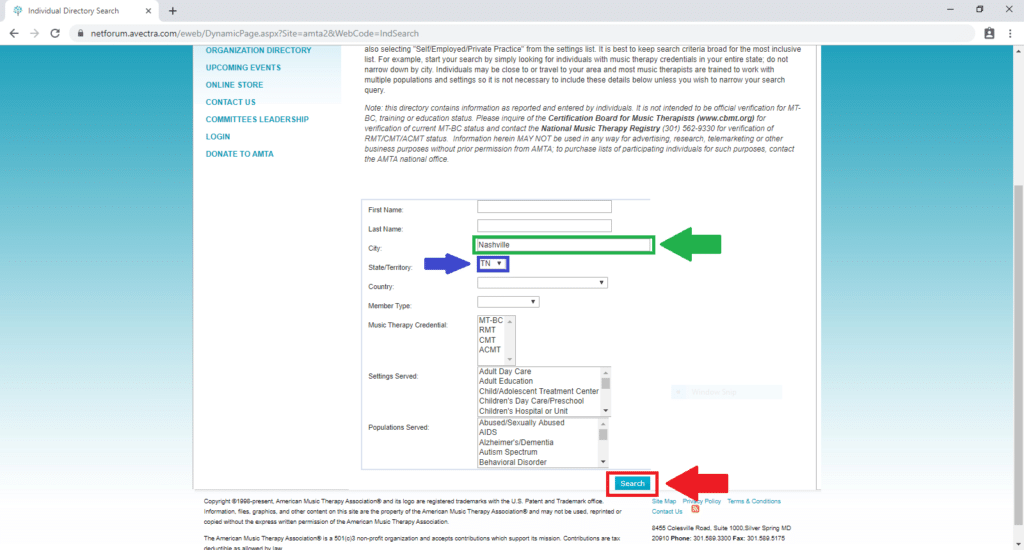
If you’re looking for a music therapist in your area, click here. You’ll reach the search tool for the American Music Therapy Association. From there, enter your city in the bar beside the green arrow. Then select your state from the drop-down menu beside the blue arrow. We chose Nashville, Tennessee because that’s the location of our home office. Once you’ve completed that, click “Search” beside the red arrow.
How to Find a Music Therapist Step 1 | Medicare Plan Finder
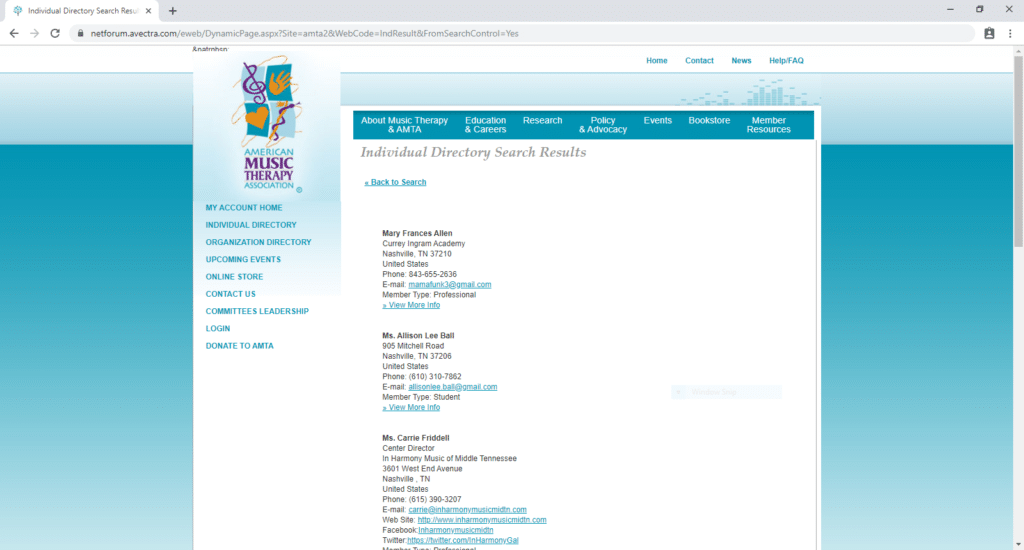
Then you’ll reach a list of music therapists in your area with contact info. You may need to call more than one to find the right fit.
How to Find a Music Therapist Step 2 | Medicare Plan Finder
Find Coverage for Music Therapy Today
A licensed agent with Medicare Plan Finder may be able to help you find an insurance plan that fits your needs.
Depending on what plans are available in your area, you may be able to find one that covers music therapy along with supplemental benefits such as vision, hearing, dental, and fitness classes! To set up a no-cost, no-obligation appointment, call us at (833)-567-3163 or contact us here today.
Contact Us | Medicare Plan Finder
This post was originally published on February 15, 2018, and updated on October 2, 2019.
Medicare Meal Delivery Services & Meals on Wheels
According to a report from the non-profit organization Feeding America, 5.5 million adults 60 and older are “food insecure,” meaning they lack access to enough quality foods. Many seniors and Medicare eligibles may be homebound due to medical conditions or income level, and they simply can’t get out to buy the food they need.
Meals on Wheels or Medicare meal delivery services may be able to help if you meet certain conditions.
What Is Meals on Wheels?
Medicare Food Delivery | Medicare Plan Finder
Meals on Wheels is best known as a food delivery service for homebound people who don’t otherwise have access to healthy food. Meals on Wheels has more than five thousand programs that operate across the entire United States. Those programs feed more than 2.4 million people every year.
Meals on Wheels programs may operate on a sliding payment scale, meaning that you won’t necessarily be turned away if you can’t afford the meals. Some local programs accept SNAP (food stamps). Every local Meals on Wheels program has a different set of payment guidelines, so it’s best to reach out your local program if you have questions.
Typically, program members receive one meal per business day. You may not be able to receive meals on weekends, holidays, or during inclement weather.
Meals on Wheels may provide additional benefits along with food delivery. The volunteers who deliver the meals can talk to the program members, which can provide an additional social benefit.
Meals on Wheels Food Delivery Finder
Meals on Wheels’ network of independently-operated programs provides 218 million meals all over the US. While each local program may provide different services based on your community’s needs, every program is dedicated to encouraging healthier lifestyles.
If you have questions about the services your local Meals on Wheels program provides, check out the Meals on Wheels America directory. Once you’re on the page, enter your zip code and hit “enter.”
Medicare Food Delivery | Medicare Plan Finder
That leads you to a page that lists contact information for the programs in your area.
Who Qualifies for Meals on Wheels?
Each local program may have different eligibility requirements, however, most homebound people who are 60 and older will qualify. People younger than 60 may also qualify if they are homebound, disabled, and they meet certain income requirements.
Most Meals on Wheels programs use CMS guidelines for determining whether you’re homebound. The Centers for Medicare and Medicaid (CMS) defines homebound as, “confined to the home due to illness or injury.”
You don’t necessarily have to be incapable of leaving; if it is difficult for you to leave, that counts. For example, if you can’t leave the house without a walker, and it’s extremely physically taxing when you leave, CMS may consider you to be homebound.
Is Meals on Wheels Covered by Medicare?
Original Medicare (Part A and Part B) does not cover Meals on Wheels or any other home meal delivery service. However, certain private insurance plans called Medicare Advantage plans can offer meal delivery services if you meet certain qualifications.
Along with meal delivery, Medicare Advantage plans can cover benefits including non-emergency transportation to medical appointments, vision, dental, and hearing services.
How Do I Get Meals on Wheels With My Medicare Advantage Plan?
Most Medicare Advantage plans that offer Medicare meal delivery usually offer the service for a limited time. For example, if you’re discharged from a hospital or a skilled nursing facility, you may receive 10 pre-packaged frozen meals. Your plan may have limits on how many times per year you can receive the post-discharge Medicare food delivery service.
Another way Medicare Advantage plans can offer meal delivery services is if you have a chronic condition. Your plan may offer a set number of pre-packaged meals annually if you have special dietary needs.
Some plans will offer the meal delivery benefit more than once per year to people who have multiple conditions. Some Medicare Advantage plans may allow doctors to order more meals depending on your needs, too.
The licensed agents with Medicare Plan Finder can help you find a Medicare Advantage plan in your area that offers meal delivery services. We are dedicated to helping you find the best plan for your lifestyle and budget.
Medicare Advantage | Medicare Plan Finder
Does Medicaid Cover Meals on Wheels?
If you are homebound and eligible for Medicaid, your state may provide a waiver that pays for home-delivered meals. Medicaid will only cover Medicaid-approved meal delivery services such as Mom’s Meals and Homestyle Direct.
For example, some states require nutrition counseling for Medicaid beneficiaries. Other states do not. If you have questions about your state’s requirements for Medicaid meal delivery services, click here to contact your state’s Medicaid office.
Each state has different policies regarding how you pay for home meal delivery. Some states pay as little as $3.00 per meal, and some pay as much as $8.00 per meal.
How Do I Get Meals on Wheels for My Mother/Relative?
Every local program has different rules about how to apply for Meals on Wheels, and who can apply. Contact your local program’s office to learn about specific requirements.
Some Meals on Wheels programs can cost about $7 per meal, but they accept contributions based on what the recipient can afford.
Even though your loved one’s local Meals on Wheels program may operate on a sliding payment scale or accept SNAP, a Medicare Advantage plan with meal delivery may be the best option for your relative to get vital nutrients after a hospital stay. You can only make Medicare decision’s on your relative’s behalf if you have durable power of attorney (POA).
Agents cannot legally discuss your loved one’s protected health information (PHI) without durable POA. Talk to your agent about your loved one’s needs. Your agent can help you determine if a Medicare Advantage plan with meal delivery is right for your relative.
What Is a Typical Meals on Wheels Menu?
Medicare Meal Delivery | Medicare Plan Finder
Many Meals on Wheels programs provide one meal per day that meets ⅓ of the Food and Drug Administration’s (FDA) recommended daily nutritional value. Meals may contain a protein, a starch, a vegetable, and a dessert.
Many local programs vary the menu every month so you aren’t getting the same thing every day. For example, one day’s meal might be:
Protein: Barbecue pork
Starch: Red potatoes
Vegetable: Spinach salad with French dressing
Dessert: Banana bread
Can I Choose What I Get?
Some local Meals on Wheels programs give their recipients options for meals, such as a diabetes-friendly dessert or a vegetarian option. However, because each program is different, the Meals on Wheels program near you may not let you choose what you get.
How We Can Help With Medicare Meal Delivery
The right Medicare Advantage plan can help provide you with the nutrition you need after a hospital stay or if you have a chronic illness. Our licensed agents can help you find the best health insurance plan that fits your needs. Call 844-431-1832 or contact us here to learn more today.
Contact Us | Medicare Plan Finder
This post was originally published on July 25, 2019, and updated on September 30, 2019.
Does Medicare Cover Knee Replacements?
More than 600 thousand people need knee replacements every year, according to the American Academy of Orthopaeidic Surgeons (AAOS). If you’re one of those people and you have Medicare, you may wonder, “Does Medicare cover knee replacements?” Yes, but only in certain circumstances.
Medicare Criteria for Total Knee Replacement
Does Medicare Cover Knee Replacements? | Medicare Plan Finder
In order for your Medicare plan to cover a knee replacement procedure, the surgery must be medically necessary. For example, the Centers for Medicare and Medicaid (CMS) lists the following conditions that can lead to joint replacement:
Osteoarthritis (mild, moderate, severe)
Inflammatory arthritis (for example, rheumatoid arthritis, psoriatic arthritis)
Malignancy of the distal femur, proximal tibia, knee joint, and/or soft tissues
Previous knee replacement failure
Fractures
Osteonecrosis (a disease caused when the joints receive less blood than normal)
*This list is not exhaustive. You may have different conditions that lead to a knee replacement.
Your doctor will perform a physical exam before recommending surgery. During the exam, your doctor will assess your range of motion, look at how you walk, and look for deformities and/or tenderness. Your doctor will likely order blood work and other lab tests to determine the best possible treatment plan.
Medicare Knee Replacement Age Limit
There is no age limit for a Medicare knee replacement. However, you may still be responsible for some out-of-pocket costs.
What Is the Cost of a Total Knee Replacement if You Are on Medicare?
The exact cost of a knee replacement surgery is hard to pinpoint. Many different factors go into the total cost of the procedure including:
How long you spend in the operating room
The type of anesthesia and the amount the doctor uses
X-rays during and after the operation
Post-surgery medications to manage pain, prevent infection, and help prevent blood clots
How many days you spend recovering in the hospital
Post-surgery physical therapy to help exercise your knee
With Original Medicare, Part A may cover your hospital stay after you meet the Part A deductible. AAHKS says that most people stay in the hospital for 1-3 days “depending on your rehabilitation protocol and how fast you progress with physical therapy.”
If your surgeon recommends an outpatient TJA, Medicare Part B may cover the procedure. If Part B covers the procedure, you may owe 20 percent of all Medicare-approved charges, Part B may pay the remaining 80 percent.
Does Medicare Cover Knee Replacement Surgery Recovery?
Medicare Part A will cover a temporary stay in a skilled nursing facility. Original Medicare may also cover medications, testing, and other clinical services.
Medicare Part B covers postoperative follow-up appointments. Original Medicare may not cover prescription drugs to fight pain or prevent infection, but a Medicare Part D or Medicare Advantage plan with a prescription benefit can cover those medications.
Free Prescription Discount Card
Knee Replacement Cost With Medicare Advantage
If you qualify for Medicare, you can get a Medicare Advantage (MA) plan, which is a private insurance plan that can cover the same services as Original Medicare. The difference is that a MA plan can cover additional benefits such as grab bars and meal delivery for when you return home from a hospital stay.
Each MA plan may require a different deductible, copay, coinsurance payment, or out-of-pocket maximum*, so what you actually pay depends on your plan.
Some Medicare Advantage plans offer a prescription drug benefit, which Original Medicare does not. You may owe a copay or coinsurance for your postoperative medications, and those payments vary by plan.
Knee Replacement Cost With a Medicare Supplement Plan
While Medicare Advantage plans cover Original Medicare services plus additional benefits, Medicare Supplement (Medigap) plans cover financial items such as deductibles and coinsurance. You must choose one because you cannot have both a MA plan and a Medigap plan.
A Medicare Supplement plan can pay some or all of your out-of-pocket costs. Note: You may still owe at premium.
If you’re unsure if a Medicare Advantage or Medicare Supplement plan is right for you, a licensed agent with Medicare Plan Finder Can help. There may be many plans to choose from in your area. Our agents are highly trained and may be able to help you find a plan that suits your needs.
Contact Us | Medicare Plan Finder
What’s Involved in a Knee Replacement Surgery?
Discussing a Knee Replacement Procedure With a Surgeon | Medicare Plan Finder
Your surgery may be a total knee replacement or a partial knee replacement depending on how damaged your joint is.
Regardless if your procedure is a partial or total knee replacement, the surgery will require anesthesia. Your surgical team may use general anesthesia, which makes you sleep during the surgery, or spinal anesthesia, which makes you numb from the waste down, but you’re still awake.
During the procedure, your surgeon will bend your knee to see the entire surface of the joint. Then your surgeon will make an incision 6-10 inches long and then cut out any damaged joint surfaces.
After the joint is prepared, then your surgeon will attach the artificial joint and close the incision after making sure the new joint works properly. According to the Mayo Clinic, the procedure lasts about two hours.
Get Medicare Coverage for Knee Replacement Surgery Today
If you need a knee replacement and want to find the right Medicare plan to cover the procedure, one of our licensed agents may be able to help. There may be many plans available in your area, but how do you know which one is right for you? Your agent will assess your needs, show you the available options, and then help you determine the best path to take. To set up a no-cost, no-obligation appointment, call 844-431-1832 or contact us here today.
Find Medicare Plans | Medicare Plan Finder
BREAKING NEWS: Tennessee SilverSneakers® Program Splits from YMCA
SilverSneakers® announced on Tuesday, September 17, that the Tennessee State Alliance of YMCAs decided to leave the SilverSneakers® network effective January 1, 2020, citing financial disagreement.
The alliance apologized, stating, “Seniors are a vital part of our membership, and we apologize for any inconvenience this decision may cause. Tennessee Ys are committed to continuing to serve seniors in our community.”
SilverSneakers® is a Medicare fitness program that allows eligible Medicare beneficiaries access to gyms, fitness centers, and classes. Many of these often take place within YMCAs, offering not only physical fitness benefits but also a social atmosphere.
Eligibility for the program is simple – anyone who is age 65 or older and has a private Medicare plan that includes the SilverSneakers® benefit can join.
Watch this brief video to learn more about Medicare fitness programs:
The news that SilverSneakers® may not cooperate with Tennessee YMCAs anymore may be detrimental to seniors who made use of that benefit. If you’re one of those people, what should you do next?
What to do if You’re Losing Your YMCA SilverSneakers® Benefit
If you have SilverSneakers® but are no longer going to be able to visit a YMCA with your membership, all hope is not lost! There are a few steps you can take:
Pay for your own senior YMCA membership ($59/month in Middle TN. Prices range based on location)
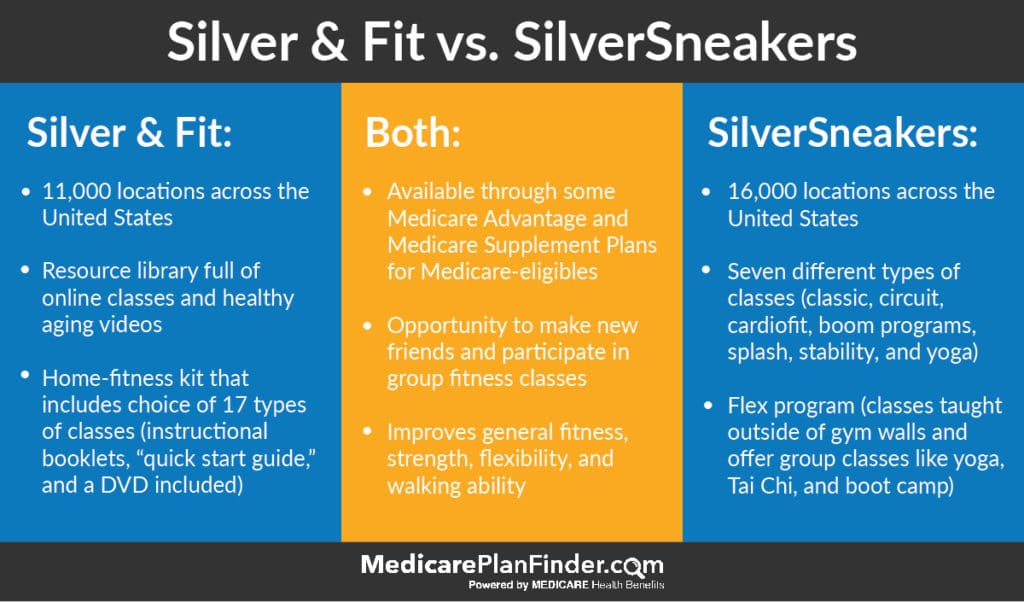
Find a plan that has Silver & Fit® instead (another Medicare fitness program that is very similar to SilverSneakers® but still works with YMCAs as of September 2019)
Silver & Fit vs. SilverSneakers
Other Gyms You can Visit with SilverSneakers ®
Tivity Healthcare, the company that operates the SilverSneakers® program, wants to make it clear that there are still over 350 facilities in the state of Tennessee that SilverSneakers® members can use. Planet Fitness, Gold’s Gym, Anytime Fitness, and Workout Anytime as well as a variety of community centers are still part of the SilverSneakers® network in Tennessee and may be a great option for you.
Planet Fitness
Planet Fitness locations across the state of Tennessee offer benefits like massages, tanning, and even discounts on travel and Reebok products. Most locations have long hours, and some are open 24-7. Many of them also have free WiFi!
Gold’s Gym
Gold’s gym locations offer group exercise classes, personal training, and more. Group exercise classes include Yoga, Zumba, Mixed Martial Arts, Group Cycle, and High-Intensity Interval Training.
Anytime Fitness
Different Anytime Fitness locations offer different equipment such as treadmills, ellipticals, cycles, stair climbers, rowing machines, weights, kettlebells, etc. They also offer different classes like Zumba, cardio, yoga, and additional services like tanning, private showers, wellness programs, and personal training.
Workout Anytime
Workout Anytime locations have high-quality equipment from Matrix Fitness, which has received rewards for innovation. They also have high-quality polypropylene, antimicrobial flooring that is beautiful, comfortable, and clean.
If you decide that you would rather stick to a YMCA membership and do not want to try out some of the other SilverSneakers® locations options, a licensed agent can help you find a plan that includes Silver & Fit® instead.
Silver & Fit® is similar to SilverSneakers® and includes a digital resource library, home fitness kits, community activities, and several different fitness classes at various fitness centers in Tennessee.
Silver & Fit® locations across major cities in Tennessee are listed below:
To find a plan that includes Silver & Fit®, call 844-431-1832 or send us a message. We’ll connect you with a licensed agent in your area who may be able to help you make the switch.
Many people remember the “I’ve fallen and I can’t get up,” commercials from the ‘80s and ‘90s and laugh, but those ads actually sold a useful product called a medical alert system or personal emergency response system (PERS).
Life Alert, who currently owns the trademark to the phrase, is just one medical alert system on the market today. With the press of a button, you can call for help when you need it most!
If you have Medicare insurance you may want to know, “Does Medicare cover Life Alert or any other medical alert system?” The answer may be complicated.
Does Medicare Cover Life Alert Wristbands?
Does Medicare Cover Life Alert? | Medicare Plan Finder
Usually, a medical alert system comes in the form of a pendant button that’s worn around the neck. The system has a base station that communicates with the pendant to call emergency medical staff. The systems can also be wristbands or speakerphones.
Original Medicare does not cover Life Alert wristbands or any other medical alert system, but there may be other ways to receive private Medicare insurance coverage or discounts on personal emergency response systems.
If your Medicare plan doesn’t cover PERS, Medicaid as well as specific long-term care insurance policies may cover certain personal emergency response system costs in some states.
Medicare Advantage | Medicare Plan Finder
Life Alert Systems for Seniors and Medicare Eligibles
A medical alert system may provide peace of mind to someone who lives alone. For example, your caregiver may not be with you 24 hours a day. If you fall, you might not be able to reach a phone to ask for help. Some medical alert systems have a fall detection feature so the system can call for help if you take a tumble.
Medical Alert System Features
Every medical alert system can call for emergency services, but some offer additional features including:
Fall detection and/or prevention: According to the CDC, falls are the leading cause of “injury and death in older Americans.” Some medical alert systems offer a fall detection feature for an additional fee.
Health monitoring: Along with alerting emergency help, some personal emergency response systems can monitor health vitals, such as blood pressure and pulse, and can even send medication reminders.
GPS tracking: This service can be extremely helpful if you or your loved one is on-the-go. With a Global Positioning System (GPS), emergency responders can find the person who wears it no matter where they end up.
Activity tracking: Much like a Fitbit, some medical alert devices can track your activity inside or outside the home. Some include a built-in step counter and health challenges to keep you moving.
Daily check-in services: Some devices offer a check-in feature either with a live person or electronically.
Home security monitoring: Falls aren’t the only type of emergency. Some medical alert devices can alert emergency services in the event of fire, smoke and/or carbon monoxide.
Specific Medical Alert Systems and Their Features
To give you a better idea of what devices have certain features, here are five popular medical alert systems and their features:
Bay Alarm Medical:This device features 24-hour monitoring, a one thousand foot range for home devices, a waterproof pendant with 36-hour battery life, and offers landline, cellular, and GPS options with automatic fall detection.
Life Alert:This medical alert system offers options for landline, cellular, and GPS service, 24-hour monitoring, and batteries that last up to 10 years and do not need charging.
Medical Alert:This personal emergency response device features automatic fall detection with all systems, 24-hour monitoring, landline or cellular systems, a GPS option, and a lockbox option.
Medical Guardian:This PERS features a lockbox, 24-hour monitoring, a 1,300 foot range, and waterproof pendants with a 72-hour backup battery.
MobileHelp:This device features 24-hour monitoring, waterproof help buttons, a GPS option, and two-way voice communication. MobileHelp does not require a landline to use its product.
What to Consider When Looking for a Medical Alert System
Consider your lifestyle and your needs when you look for a personal emergency response system. Ask yourself the following questions:
How do I wear the device, and is it comfortable? If your device has sharp edges or it can irritate your skin, you may want to find a different option.
How far can I go with the device? Some devices are only meant for the home. If you go outside the device’s range, say one thousand feet, it may not work. Other devices can connect to a smartphone so you can contact emergency support if you leave your house and can’t reach your phone.
How durable is the device? You want a device that can handle the demands of your day-to-day life. You want a device that won’t break when you need it most.
How long does the battery last? Consider the device’s battery life and how you charge the device. Find out how long it takes to charge and how to know when the battery is low.
How easy is it to set up? If your device is too complicated to set up and use effectively, then it’s not providing a useful service. Also, find out if the device will require technology updates, and if those updates happen automatically or if you’ll have to manage them.
Does it come with a lockbox? Some companies install a lockbox so emergency responders can enter your home if you’re incapacitated. The lockbox can help keep your home safe while letting emergency personnel do their jobs.
Can my caregiver or family members connect to the device? Some medical alert systems allow your caregivers and/or family members to connect to the device. Ask yourself if that’s something you need.
How long does it take for someone to respond? In an emergency, someone should respond in a matter of seconds. Sometimes waiting longer than that can make a huge difference in your recovery.
Does the company have good customer service? Find out if the response center staff receive adequate training and if they can talk to your loved one in their preferred language. Also, you may have to speak to someone if it’s not an emergency. Learn about the company’s tech support and how to ask questions about their service and the device itself.
How Much Is Life Alert?
Looking at Life Alert Costs | Medicare Plan Finder
Medical alert systems aren’t free. With most systems, you’ll pay a monthly fee of about $25-$50 a month, plus an initial installation fee.
Be sure to read the fine print. If you do have to sign a contract, find out what it takes to leave the contract. For example, some companies will void the contract if you enter a nursing home.
Find Personal Emergency Response System Coverage
Even though Original Medicare does not cover Life Alert or any other medical alert system, a licensed agent with Medicare Plan Finder may be able to help you find coverage. Our agents are highly trained and they can help you see what plans are available in your area, and they can help you select the best one for you. Call 844-431-1832 or contact us here today.
Contact Us | Medicare Plan Finder
Simply Explained: Ancillary Insurance
Private Medicare plans like Medicare Advantage and Medicare Supplements can cover a lot of benefits, but they generally don’t cover everything. Ancillary insurance products like separate dental plans, heart attack insurance, and life insurance are all important too.
Depending on what Medicare plan(s) you have, ancillary insurance products might be necessary to provide you with the comprehensive coverage and peace of mind you need.
What Are Ancillary Insurance Products?
What Are Ancillary Products? | Medicare Plan Finder
Our ancillary insurance definition is any insurance product that is beyond the scope of traditional health insurance or is not included in your healthcare plan. One of the most common ancillary products is life insurance – but ancillary goes far beyond that. Ancillary private health insurance can help you cover the healthcare needs that your Medicare insurance does not cover.
Here are some of the ancillary products that our agents sell:
You might think, “wow, do I really need all of those?” You might not – but if you do, you might be able to bundle your benefits. For example, you might be able to find a combination dental and vision plan, or a combination heart attack and stroke plan. Whether or not you need any of these products can depend on your finances, your genetic probability of contracting certain conditions, and what types of plans are available in your area.
Ancillary insurance products are never meant to replace your current health insurance. They are additional products that supplement your existing coverage.
What are examples of ancillary services?
The term “ancillary services” refers to medical services that are not typically provided by your primary care physician. It could mean a service provided by a specialist for your critical illness, a therapist for your long-term disability, etc. Some of these services might already be covered by your disability insurance, Medicaid, or another health plan – but many are likely not covered.
Here’s a list of ancillary services to consider when deciding whether or not you need ancillary insurance:
Ambulance care
At-home preventative care
Audiology
Behavioral health
Chronic care
Heart monitoring
Home healthcare and private nurses
Home medical equipment
Hospice
Infusion therapy
Lab tests
Medical daycare
Mobile services and testing
Orthotics/prosthetics
Radiology
Rehabilitation of any kind
Specialized imaging
Transitional care
Ventilator services
Dental, Vision, and Hearing
Three of the most common types of ancillary insurance plans are those for hearing, vision, and dental coverage. Original Medicare will only pay for some of your very specific dental, vision, and hearing costs.
Medicare Part A and Medicare Part B ancillary services are limited to what your primary physician or hospital staff can do. For example, if you schedule an annual wellness visit with your primary physician and they perform a quick hearing and eye exam, that visit is still covered under your Medicare Part B. Additionally, if you have a medically necessary jaw surgery or receive face tumor treatment in a hospital, most of the related dental work falls under your Medicare Part A. However, if you end up needing more dental, hearing, or vision care, it won’t be covered by Original Medicare.
Private vision, hearing, and dental insurance can help you cover your costs and help you stay on top of your healthcare. Some Medicare Advantage plans include all of these benefits, so before you select an ancillary product, check to see if there is a Medicare Advantage plan in your zip code that makes sense for you.
Short-Term Care
A short-term plan will cover you for up to a year for a temporary injury or illness. For the most part, long-term care is included in your Original Medicare. Short-term care, however, is always an add-on option through a qualified ancillary insurance plan. If you’re concerned about short-term care, let your insurance agent know. They will help you decide whether Medicare Advantage, Medicare Supplements, or another ancillary product will be best for your short-term care needs.
Cancer, Heart Attack, Stroke
Medicare parts A and B, respectively, will cover your hospital stays and doctor visits relating to cancer, heart attacks, and strokes. Some policies are as simple as large payments upon diagnosis.
Others may include annual payouts based on costs, even including loss of income, childcare, travel to facilities, home health care, rehabilitation/therapy, and any other out-of-pocket costs that Original Medicare does not cover.
If you feel comfortable, it helps to disclose your and your family’s medical history when speaking with an agent. That way, the agent can determine whether an ancillary plan for cancer, heart attacks, or strokes is right for you.
Hospital Indemnity
Ancillary hospital indemnity policies are the best, cheapest way to save your piggy bank in the event of an extended hospital stay.
The average cost for one night in the hospital is between $1500-$3000. Your Medicare plan will help cover most of that, but not all, and does not include additional procedures and prescription drugs.
You’ll send in a claim stating what your copayment was, and your carrier will send you a check for a percentage of that amount. This will be especially beneficial if you foresee any medical procedures that will require an extended hospital stay.
Life & Final Expense
Final expenses are any costs associated with funerals, burials, and sometimes medical bills for your final hours. You can buy a final expense whole life plan, meaning the policy lasts for your entire life, or a final expense term life plan, which lasts for a set number of years.
Final expense policies help to reimburse your family members for expenses surrounding your death. You must appoint a beneficiary to receive the reimbursement when you purchase your policy. You will have the ability to change your beneficiary after your policy has been active for a year.
Life insurance is different from final expense because it insures additional finances. For example, it can help your family pay off your mortgage or other debts after you pass. If you don’t already have life insurance, it’s best to invest as soon as possible, because costs will increase as you age.
How Ancillary Benefits Work
Your ancillary insurance carriers could be the same as your carriers for other insurance plans, or they could be different. For example, carriers who sell auto and home insurance are likely also to sell life insurance. Additionally, carriers who sell Medicare Advantage plans are likely to sell other individual health benefit plans.
Even if you have Medicare, ancillary plans provide voluntary benefits and do not fall under Medicare laws. You can enroll in ancillary products during any time of the year (unless you are enrolling through your employee benefits package, in which case your employer might have an enrollment period).
Ancillary billing will be completely separate from your Medicare coverage. If you are still employed, some ancillary benefits can be employer-contributory, meaning your employer agrees to pay part of your premium.
Many ancillary products, like cancer insurance plans, pay by lump sum. With our cancer example, you would receive a lump sum cash benefit upon diagnosis. Keep in mind that a product like that may not be available after you’ve already been diagnosed. Unlike Medicare Advantage plans, ancillary products can and will put you through medical underwriting and can deny you for preexisting conditions.
The Advantages of Ancillary Benefits
When you start looking through all of the available Medicare health plans, you may discover that while many of the available plans could work for you, they aren’t perfect. Additional benefits for Medicare beneficiaries can be hard to come by, especially if you live in an area that does not have many plan options to choose from. Some Medicare plans do offer additional rider insurance (extra health benefits), but they might not be exactly what you need.
That’s why ancillary services insurance may be a good idea. If you can’t find a good Medicare Advantage plan that covers all of your additional medical concerns, like dental, vision, hearing, cancer, heart attack, etc. – ancillary might be the route to go. You will still need coverage for healthcare, so make sure you stay enrolled in Medicare. Then, you can add whichever ancillary products make sense for you.
Frequently Asked Questions About Ancillary Insurance Products
Discussing Ancillary Insurance Products With an Agent | Medicare Plan Finder
You may have many questions about ancillary products, insurance coverage, and costs, including:
Q: Why aren’t these ancillary benefits included in my Medicare plan?
A: Each individual who has enrolled in Medicare has different healthcare needs. You can select a Medicare Advantage or Medicare Supplemental insurance plan that fits your needs, then select any additional ancillary products separately.
Q: Why didn’t my agent discuss these with me sooner?
A: If an agent visited with you to discuss Original Medicare, Medicare Advantage, or Medicare Supplements, they likely were not legally allowed to discuss ancillary plans with you. The Centers for Medicare and Medicaid Services (CMS) has specific rules in place to protect you. If you’d like to discuss ancillary insurance products, your agent will need to come back another day.
Q: How much do these products cost?
A: Costs for ancillary plans vary depending on your needs and what the policy covers. Your agent can discuss any details and help you find the right fit.
Q: So how do I get ancillary insurance?
A: If you are employed, your employer may or may not provide ancillary plans. The best way to get information about ancillary benefits is to speak to your agent.
Get the Ancillary Plans You Need Today
We have insurance agents available who can help you select from the available Medicare Advantage plans for 2020 as well as other ancillary products. Speak with a licensed & local agent today by calling 844-431-1832 or contact us here.
Call Medicare Plan Finder | Medicare Plan Finder
How Mail Order Prescriptions Can Save You Time and Money
Did you know that you can order your prescriptions online and save money? That’s right – no more rushing to get to the pharmacy on time or having to ask someone to pick up your prescriptions for you. You may even be able to schedule your prescriptions to deliver exactly when you need them with automatic refills!
Pros and Cons of Mail Order Pharmacy
Using a Mail-Order Pharmacy | Medicare Plan Finder
Ordering prescriptions from a mail order pharmacy comes with pros and cons.
Pros
Time Saving: You can save hours by not having to make monthly, weekly, or daily trips to the pharmacy. All you’ll have to do is click a button and wait to receive your medications – no standing in line, no rushing to get to the pharmacy.
Cost Saving: You can save money on gas and help minimize wear and tear on your car. Using a mail order pharmacy eliminates the need to travel.
Automatic Refills: Most mail-order offer an automatic refill option. This is great for people who forget to have their prescriptions refilled or pick them up. Some pharmacies will even call your doctor to renew your prescriptions!
Cons
Waiting for Prescriptions: Even though you can order your prescriptions with the click of a button, you still have to wait for your prescriptions. That can be a drawback if you need your prescription immediately.
Prescriptions Can Be Lost: It’s rare, but sometimes prescriptions can be lost in the mail. However, most mail-order pharmacies will re-ship your medication at no additional cost. If you’re concerned about package theft, it may be in your best interest to pick up prescriptions in person.
Automatic Refills: Having your prescriptions refilled automatically can be both a pro and a con. If you’re someone who usually sets and forgets, you could end up with a lot more pills than you need!
The Delivery Fee
Contrary to popular belief, most mail order prescriptions can be delivered without a shipping fee! If delivery fees are what was holding you back from using an online pharmacy, you can check that off your list. Pharmacies don’t have to charge a shipping fee because mailing your prescriptions can actually save them money.
They don’t have to pay for the time and labor it takes to stock prescriptions in-store and they can ship to you directly from a warehouse. There may be shipping fees associated with medical equipment and supplies, but most prescriptions can ship free.
When Should I Stick to my Local Retail Pharmacy?
There are only a few downsides to mail order prescriptions. Mainly, you will lose out on the face-to-face interaction with your pharmacist. However, you can always call your pharmacist to ask questions or speak to your doctor instead.
Your local retail pharmacy, like a CVS or Walgreens, can delivery your prescriptions to your door as well. If you are comfortable using your local retail pharmacy instead of searching for a new mail order pharmacy, stick to it instead of trying to fix what is not broken.
When Should I Expect to Receive my Prescription?
Some prescriptions may take up to 14 days to arrive at your door, so you may still need to visit your pharmacy in person to get your cold medicine and other immediate needs.
Long-term prescriptions, though, can be automatically mailed when you need them. If you work with your pharmacy to set up auto-refills, you should receive your prescription in the mail well before you need it so that you never run out of your medication.
Top Mail Order Pharmacies
It’s always a good idea to start by checking if your health plan has its own mail order pharmacy. Many carriers do, and they can save you a lot of money that way! For example, Cigna just merged with digital pharmacy Express Scripts. You can also check with your favorite drugstore chain. CVS, Walgreens, and Publix are just three examples of chains that offer prescription delivery services. You can also consider the following:
Blink Health – What’s unique about Blink Health is that you can have your prescriptions delivered to your home, or you can pick them up from a local participating pharmacy. Either way, you can see the prices before you buy and choose the cheapest and easiest option for you.
EnvisionPharmacies – Envision is divided into three parts. Envision Mail is a typical mail order prescription service, EnvisionSpecialty provides patient, caregiver, and provider support, and Envision Compounding is quite different. The compounding sector creates alternative forms of medications and sends them to patients who cannot swallow pills or have unique allergies.
HealthWarehouse.com – Selling both brand name and generic prescriptions for both you and your pets! Over the counter drugs, diabetic supplies, and home medical equipment is also available. Just create an account and ask your doctor to send your prescriptions to HealthWarehouse.
PillPack – Not only does PillPack allow you to order your medications online, but they can also sort your pills by dose for you. For example, if you both Drug A and Drug B at 8 AM every day, and you take Drug C at both 8 AM and 8 PM every day, you’ll receive two packs for each day: one that contains Drug A, Drug B, and Drug C and is labeled “8 AM,” and one that contains Drug C and is labeled “8 PM.” They are dated so that you won’t lose track. PillPack is now owned by Amazon.
How to Find a Safe Online Pharmacy
Any pharmacy your Medicare plan recommends will likely be legitimate. However, there are many fake online pharmacies that will try to scam you. They appear to be legitimate pharmacies but they actually send fake drugs.
To help raise awareness about these fake online pharmacies, the Food and Drug Administration (FDA) launched BeSafeRx. According to the FDA, a legitimate pharmacy will:
Require a valid prescription from your provider
Be licensed by your state board of pharmacy, or equivalent state agency. (To verify a pharmacy’s licensing status, check your state board of pharmacy.)
Have a U.S. state-licensed pharmacist on staff and on call to answer your questions
Be located in the United States, and provide a physical street address, not just a post office box
How to Report Illegal Medicine Sales
If you become aware of unlawful medicine sales, you can report the rogue pharmacy with the FDA. Fill out the form here with as much detail as possible.
How is my Insurance Plan’s Mail Order Pharmacy Different From Other Online Pharmacies?
Excellent question! Not every insurance plan has its own Medicare mail order pharmacy, so it is important to check your coverage and be sure that you have access to mailed prescriptions.
Additionally, some insurance plan mail order pharmacies are limited in what they can offer, while private online pharmacies operate independently and can function just like a brick and mortar drug store.
Compare Prescription Costs
Even if you don’t want to use the internet for ordering prescriptions and having them delivered, you can at least use it to view drug prices. GoodRx is a leader in drug price tracking. All you have to do is type in the name of the prescription drug you need, and GoodRx can tell you what pharmacy has the best price! You can also use GoodRx to print free coupons and save as much as 80% on some drugs!
GoodRx Prescription Finder Tool
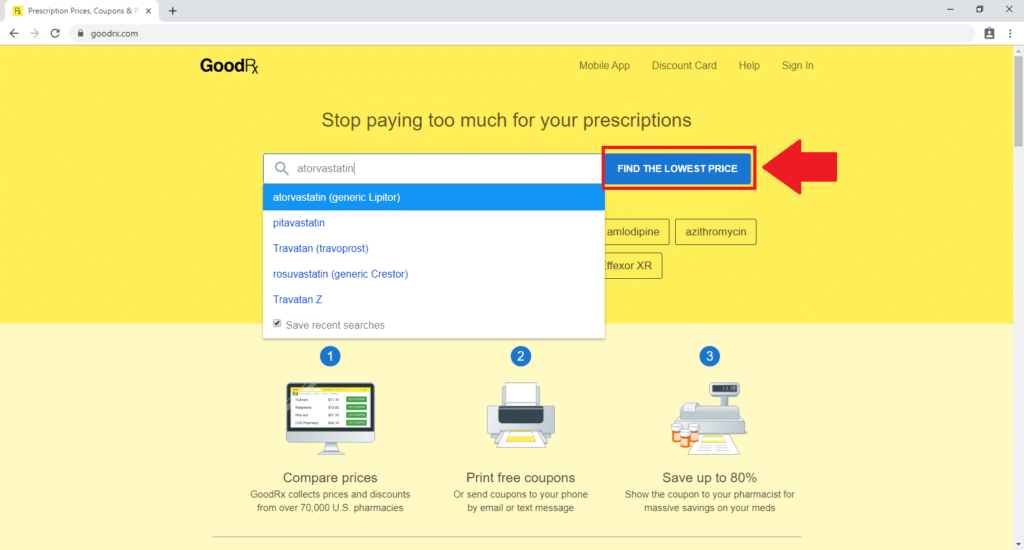
To use GoodRx’s prescription finder tool, click here. Then type your prescription in the search bar. We’re using atorvastatin (Lipitor) for demonstration purposes, but you can use any medication you want prices for. Then click “Find the Lowest Price” beside the red arrow.
Prescription Finder Step 1 | Medicare Plan Finder
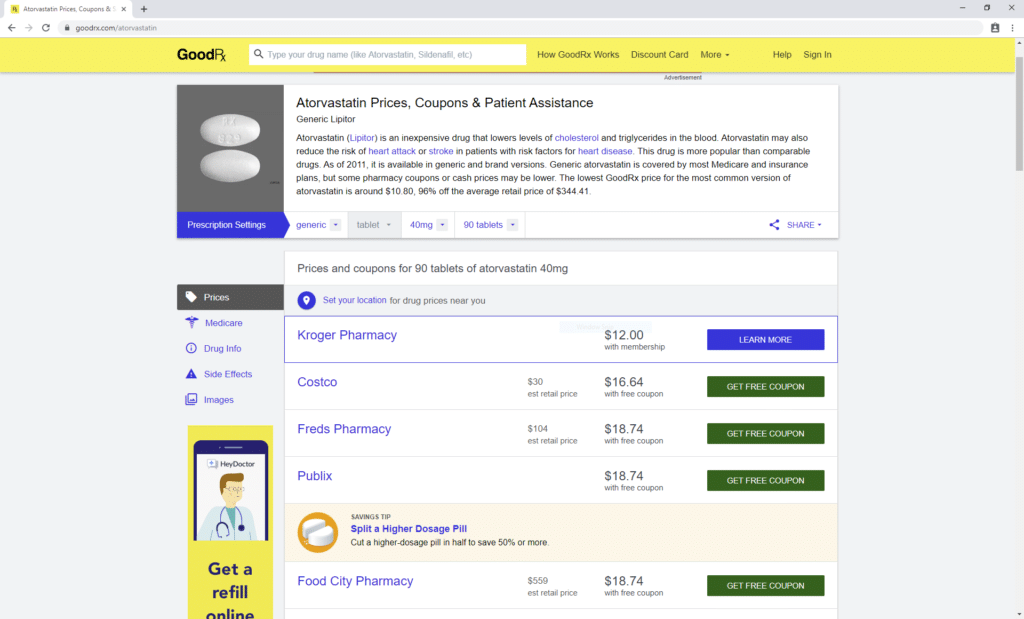
Then you’ll come to the price list with several pharmacy options.
Prescription Finder Step 2 | Medicare Plan Finder
Prescription Savings Coupons
When GoodRx, mail-order prescriptions, and your Medicare coverage aren’t enough, there are prescription drug discount cards! Since these cards are not part of Medicare, you can sign up for a card at any time. Having a prescription drug savings card is sort of like having a coupon book.
There may be times when you don’t need your Rx card because your Medicare coverage gets you even bigger savings, but there are other times when your card can save you a lot of money!
Free Prescription Discount Card
Get Medicare Mail Order Pharmacy Coverage Today
Do you have a Medicare Advantage or a Part D prescription drug plan? Do you know if you qualify for LIS, a prescription drug savings program for Medicare beneficiaries? We can help answer your questions and make sure you are getting the best benefits at the best price, and make sure you are eligible for mail order prescriptions.Set up an appointment at no cost to you by calling us at 844-431-1832 or contact us here.
Contact Us | Medicare Plan Finder
*This post was originally published on February 8, 2018 and last updated on September 23, 2019.